
By Kristin Burns
TDCAA Domestic Violence Resource Prosecutor in Austin
My daughter, Emilia, was in the eighth grade when she came storming into the house one spring afternoon. “Why didn’t you tell me that Ms. S was one of your kids?” Her teacher, Ms. S, had been sexually abused when she was a child by her mother’s live-in boyfriend. The same man also abused her mother, so Ms. S grew up in a violent home. As a child, Ms. S had come forward to authorities to describe both types of horrific abuse committed by the same man with bravery and remarkable clarity. And apparently, earlier that day she had told her class a little about what she had learned from those experiences. Emilia looked at me with wide eyes and with an expression that was hard to describe: shock? Horror? Admiration?
Small town prosecution
I never kept my job as a rural prosecutor a secret from my kids. They knew that I was the voice in court for crime victims who oftentimes needed help in sharing their stories. What my children didn’t know was that growing up in a town of only 4,000 people, some of the friends and family who walked the halls of their schools, the aisles of Brookshire Brothers, and the bleachers on Friday nights were also the victims (and yes, defendants) in my cases. I had a hard and fast rule that I shared with all crime victims, young and old: I would never approach them in public, and I would never discuss their cases with anyone.
Rural prosecution has a special level of concern: anonymity in the land of small-town gossip. And, as my daughter sat looking at me with her big blue eyes wild with newly discovered information about one of her teachers, I understood why this rule was imperative. You see, Ms. S had shared parts of her story with her students; she dared to break through the stigma on her terms, to encourage them to be brave in the face of hard times. And in so doing, she reminded Emilia that her world is small, but not for the reasons she expected. Emilia thought her world was small because everyone knew her, her mom, and her grandparents. People would stop her on the street and say, “Aren’t you Stewart Burns’s granddaughter?” What she didn’t realize was that her world could intersect with my work, that people she knew and admired could also be victims of unspeakable crimes, people I had helped as a prosecutor at the DA’s office.
Prosecuting in rural jurisdictions carries an added burden: Crime victims are painfully aware that everyone knows their business. There are benefits of small-town life, certainly—such as having friends and neighbors to help you in your time of need—but domestic violence (DV) victims rarely call upon these folks for help. Shame often prevents victims from coming forward—in all communities, big and small—but in a small town, realizing that everyone could know you are a DV victim is overwhelming.
Which is why I was heartened and intrigued by an article I recently read. It was about a group formed in 2019 in Kleberg County to address several difficulties in helping victims of family violence.[1] This group, called the End Domestic Violence Task Force, was created to help victims of domestic violence find shelter, services, and justice in a community where everybody knows their name (and often their business). The article outlined the work this rural task force was doing to overcome everyday barriers as victims walk through the court system and the process of leaving abusers. I was so impressed with how the task force had identified issues in their community and attacked them head on—and in a way that could be implemented by other jurisdictions.
I sat down with J. Dean Craig, Assistant County Attorney in Kleberg County and member of the task force; Kathy Kimball, president of the task force; and Jennifer Radcliffe-Jones, vice president of the task force and Non-Residential Services Manager at The Purple Door,[2] a nonprofit that provides services to victims of domestic violence and sexual assault, to discuss what this group has been doing. We talked about its mission, strategies, and services, as well as how this model can be implemented by rural prosecutors statewide.
How it started
Jennifer had been working with local church ministries and pastors for years through The Purple Door. But she struggled to get volunteers and community “buy in” for her programs. And then one day, a volunteer from a local church was working when a victim of domestic violence came in particularly battered and bruised. The volunteer recognized the woman as someone from church, someone she saw every Sunday. It struck differently. For the first time, the woman she was helping was someone the volunteer knew, someone who was hurt badly enough and scared to the point that she sought out help. The extent of her injuries was startling and inspired this volunteer to action.
That volunteer went to her pastor at First Baptist Church Kingsville (known around town as First Kingsville), told him what she saw, and explained that domestic violence really was a problem in their community. From that point on, this pastor at First Kingsville was “all in,” and his support changed everything. He made it his personal mission to explain to other church leaders in town that DV was happening in their congregations too—it wasn’t something that happened only in other places. And once that message was understood and accepted, the Kingsville Ministerial Alliance went into overdrive. It’s a group of religious and community leaders, and they then joined forces with the county attorney’s office, local law enforcement, The Purple Door, and a representative of Naval Air Station in Kingsville to form the End Domestic Violence Task Force. It was meant to be an entity that acts, not just evaluates or studies, on behalf of victims.
A safe place to stay
The first action for the task force was based on work that local police officers were already doing: finding a safe place for victims to stay within their community after leaving an abuser. The task force learned that officers were pooling money to pay for hotel accommodations for domestic violence victims. The money wasn’t coming out of the police department’s budget—it was coming out of officers’ pockets. So the first step of the task force was to find a local hotel that would offer discounted rates and added protection for victims who needed safe lodging. Local accommodations were imperative because the nearest family violence shelter was over 50 miles away—a barrier that women with children and jobs couldn’t overcome. Even if they wanted to flee, it was next to impossible to go so far away when jobs, schools, family, and friends were all nearby.
The owner of a local hotel stepped up and offered his business as a safe space. He was trained to understand the dynamics of domestic violence and he is now a knowledgeable ally in the fight. These days, victims who need temporary lodging can stay within their community at this hotel. It all happens through a voucher program. Officers give the victim a voucher for her hotel stay, notify the hotel that they are coming, operate a close patrol on the hotel when victims are present, and notify The Purple Door that a voucher has been used. The voucher is also mailed to the police department and First Kingsville, which funds the program through its 501(c)(3) charter (more about that in a bit). The church pays the hotel for the voucher directly. To date, the task force and First Kingsville have sponsored close to 100 victims with the hotel voucher program.
The following day, an advocate from The Purple Door contacts the victim to discuss next steps, including any criminal case, protective orders, and safety planning. The goal is to educate victims on the systems and the people who are resources. This volunteer knows not only the process but also the points of contact at each partner agency. Additionally, the volunteer is well trained in the dynamics of domestic violence and knows that accurate information is key. Because early intervention helps develop rapport and cooperation long term, this step is vital.
A safe place within the community and early contact with the victim are two big wins to start the process off right.
A shoulder to cry on
With the hotel voucher program up and running, the next issue was victims feeling alone and overwhelmed, especially on court dates. Step two for the task force: the Court Accompaniment Program. Victims who complete protective order applications or who are involved in a criminal case are given the opportunity at both the county attorney’s office and the police department to request court accompaniment. This group of trained volunteers go to court for hearings and trials with victims so they aren’t alone. Court accompaniment has been a popular request from military spouses stationed at the Naval Air Station in Kingsville who are oftentimes far from home, family, and friends. It’s also utilized by locals. Prosecutor J. Dean Craig reports that it has been an incredible sight to see: a wall of advocates and volunteers sitting with victims in the courtroom. Victims say this program has had the most rewarding impact for them, to know they are supported through the criminal justice process. Court accompaniment has been a cornerstone feature of the task force.
A trusted location to share
When you walk through Kingsville, you’ll see emblems on the doors of various businesses and churches (as in the photo, below). This sign indicates that a business or building is part of the “Trusted Partner, Trusted Location” network, meaning there’s a knowledgeable volunteer inside from whom domestic violence victims can seek information. These spots are selected through an application process initiated by the business owner. If selected, the business owner and other staff members must complete training on reporting to law enforcement, protective orders, criminal justice, and domestic violence dynamics.
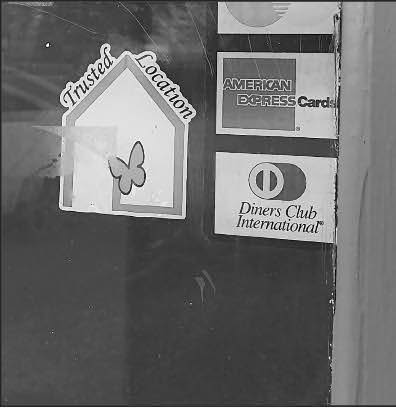
While it’s not a secret that a location has been selected, as the emblem in the doorway is clearly marked, they are often places where victims would have an unrelated, legitimate reason to visit: doctor’s offices, hair salons, churches, etc. Those who work in these locations explain the process to victims, with the goal of giving them resources and pointing them in the right direction. Abusers are often hyper-focused on their victims and know where they are and what they are doing, which is why it is imperative that the trusted locations always provide an alternate reason for a victim’s visit. People in town also know these trusted locations and can refer family and friends to those volunteers for more information.
A problem that has occurred with these locations, especially local churches, is turnover in leadership. The emblem remains in the doorway or windowfront indicating this spot is safe, but sometimes the management or ownership has changed and there are no longer any trained volunteers present. One thing the task force is working on is to keep a more diligent record of changes in leadership so that they can either remove these places as a trusted location or train the new owner and employees should they be willing to participate.
A knowledgeable volunteer
Next is what many consider to be the most important component of the task force: training. Because what good is a volunteer army if the message doesn’t coincide with domestic violence issues? The task force works with the Kingsville Ministerial Alliance and other organizations to train on domestic violence issues, the criminal justice process, and what to say (and not say) to victims. Training luncheons educate volunteers, members of the trusted location network, and community leaders, and as a result, potential jurors too! Prosecutor Craig reports that on more than one occasion, individuals who have completed task force training have appeared on jury panels. What a great resource to educate the entire panel—the prosecutor can call on someone who already knows the right answers to DV questions during voir dire.
Of particular interest is the training with local churches called Protect the Flock.[3] This training, sponsored by CalledtoPeace.org, teaches participants to identify and respond to situations involving domestic abuse. Topics include what constitutes abuse, impacts of abuse on children and society, characteristics of abusers, supporting the oppressed, and others. When members of local religious communities understand this dynamic cannot be solved by prayer alone and are equipped with the knowledge of dynamics plus how to discuss the realities of domestic violence with victims, it is a game changer. The content of Protect the Flock has resonated well among Kleberg County’s faithful and other community leaders.
A fountain of resources
Training luncheons and hotel vouchers are not free. First Kingsville has 501(c)(3) status and is the official payor of these expenses, including the voucher program. All fundraising opportunities, such as speaker luncheons where participants are asked to make donations, go through the church’s account. The task force has also seen a host of donations through businesses and individuals, many of whom are anonymous. Because, as the statistics tell us, we all likely know a victim of domestic abuse and we might support such causes, even if we don’t want our name on the donor roster.
A path for the future
Looking forward, the task force wants to incorporate an assistance fund for victims needing help with legal matters, such as costly divorce and custody proceedings. The goal is to establish a fund where victims could receive the initial $2,500 retainer for family law attorneys through the task force. The task force would then find local attorneys who are willing to work pro bono or at a reduced rate in these cases. Having legal freedom from abusers is hard if you can’t afford an attorney, and it’s not very smart to enter family law court pro se. This future goal could change the lives of so many, including the attorneys who volunteer their time—by helping domestic violence victims, these attorneys could find fulfillment in a way that we prosecutors know well.
Financial independence is one key to overcoming domestic violence. The task force wants to establish a mentorship program for financial training and trade education so that DV victims are set up for success as they move on with their lives. The goal is for victims to be more knowledgeable about finances and have a trade they can depend on, thus establishing independence and yes, self-confidence, too—believing in yourself and not listening to the negative words that have been thrown at you during a violent relationship. Knowing how to manage your money and having a trade to earn that money will be a life-changing step in the right direction.
An opportunity for prosecutors
This collaborative effort is based on volunteers. Kathy Kimball, the task force president, told me, “We want safe places for victims to go and for our volunteers to put them in touch with the right resources for help.” Kathy’s and Jennifer’s advice for all of those wishing to implement a similar program is to “start small—you don’t need grants or big funding. You just need people with big hearts.” They saw an initial need with a safe, local place for victims to stay after leaving their abusers, and they got that program established before they moved on to the next. It wasn’t a lofty, “we will stop domestic violence in our community”-type goal, but rather, small steps to help victims make big leaps.
I continue to be amazed at the power of people with big hearts and a drive to make the world around them better. I am convinced that the allies in our fight against domestic violence are all around us—we need only to call them to action with inspiring programs that help victims. This task force has certainly done just that, and so can you. These projects (hotel vouchers, court accompaniment, and a network of trusted locations) has cost the task force no money. Everything is done through fundraisers, donations, and sweat equity. We, as proud Texas prosecutors, have that drive in spades. Think about the needs of your own community and what DV problems you would address first. Maybe it’s a safe place for victims to stay or a shoulder to cry. Or maybe it’s a trusted location for them to get information about resources or training citizens to be knowledgeable volunteers—and knowledgeable jurors.
Whatever your needs, starting your own task force is a great first step. If you can help overcome the barriers of your community, you could save the life of your very own Ms. S. And she in turn, can inspire the next generation with her story of breaking the cycle of abuse, overcoming trauma on her own terms, and being brave in a small town where everybody knows your name.
[1] www.ruralhealthinfo.org/rural-monitor/domestic-violence-task-force.
[2] https://purpledoortx.org.
[3] https://calledtopeace.org/wp-content/uploads/2024/ 09/PTF-Church-Hosting-Kit-2024-Update.pdf.